Introduction
Mackay's wet season isn't shy. Heavy summer rain, sticky humidity, and fast-moving storms all stir together from around November through March. It's the kind of weather that comes and goes quickly, but it leaves a mark. For pool owners, that usually means extra cleaning and some weather-worn materials.
Custom concrete pools in Mackay are popular because they look great and feel built to last. But when the wet months roll in, people often wonder if those concrete structures can hold their own against weeks of rain and repeated downpours. The good news is, they can. You just have to think ahead and build smart.
Built Strong for Coastal Conditions
Concrete stands up well in northeast Queensland's tropical climate. It's heavy, stable, and doesn't shift like lighter materials when the soil underneath gets saturated. That makes it a solid base for properties that deal with flooding or water run-off each year.
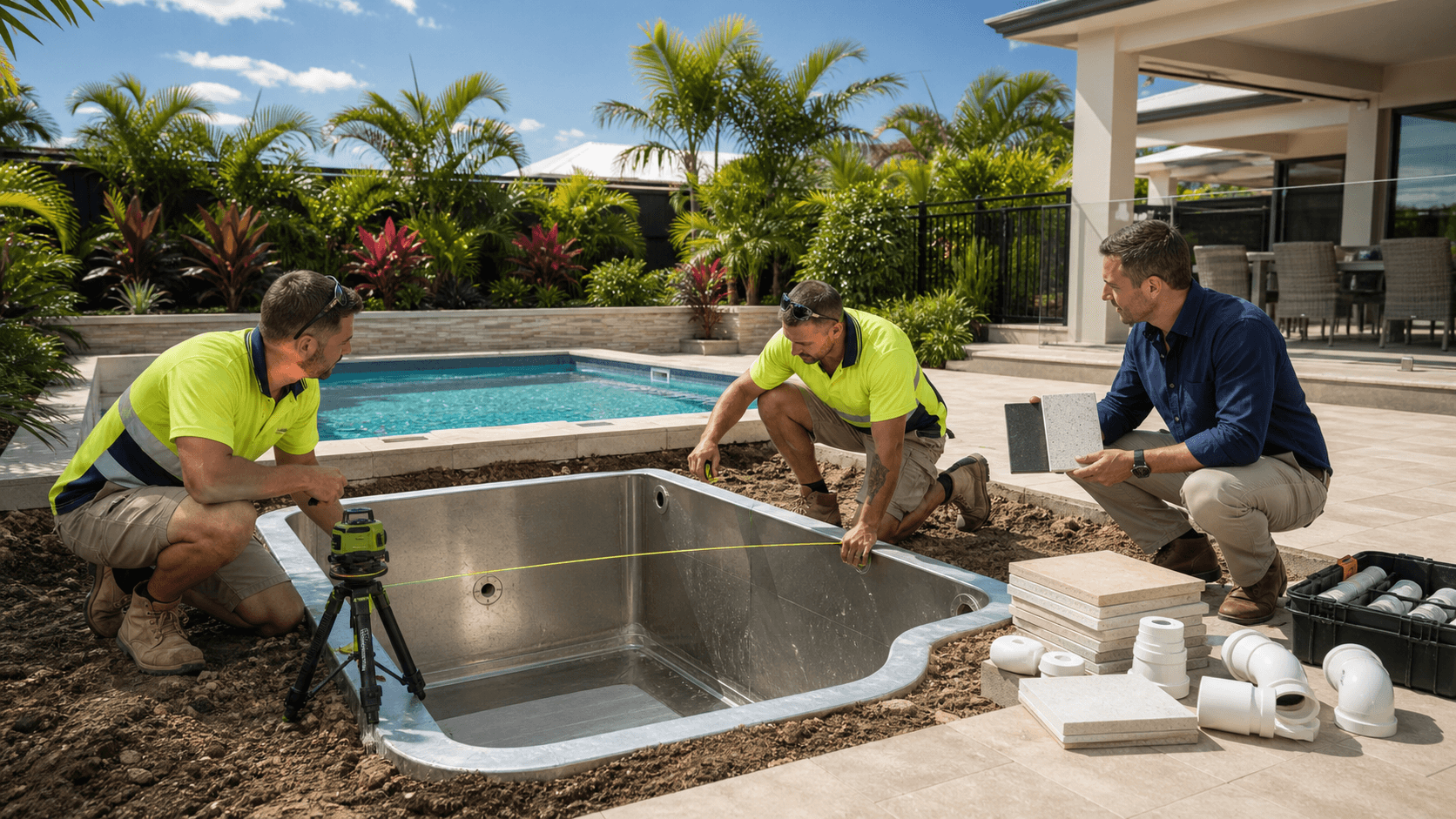
Custom pool designs let us adjust the structure to match each block. If the land slopes or holds water longer in one section, we can build the pool up and guide water away safely. We don't have to force a flat layout or fight the land's natural drainage. That's what makes custom builds really useful in regions like Mackay.
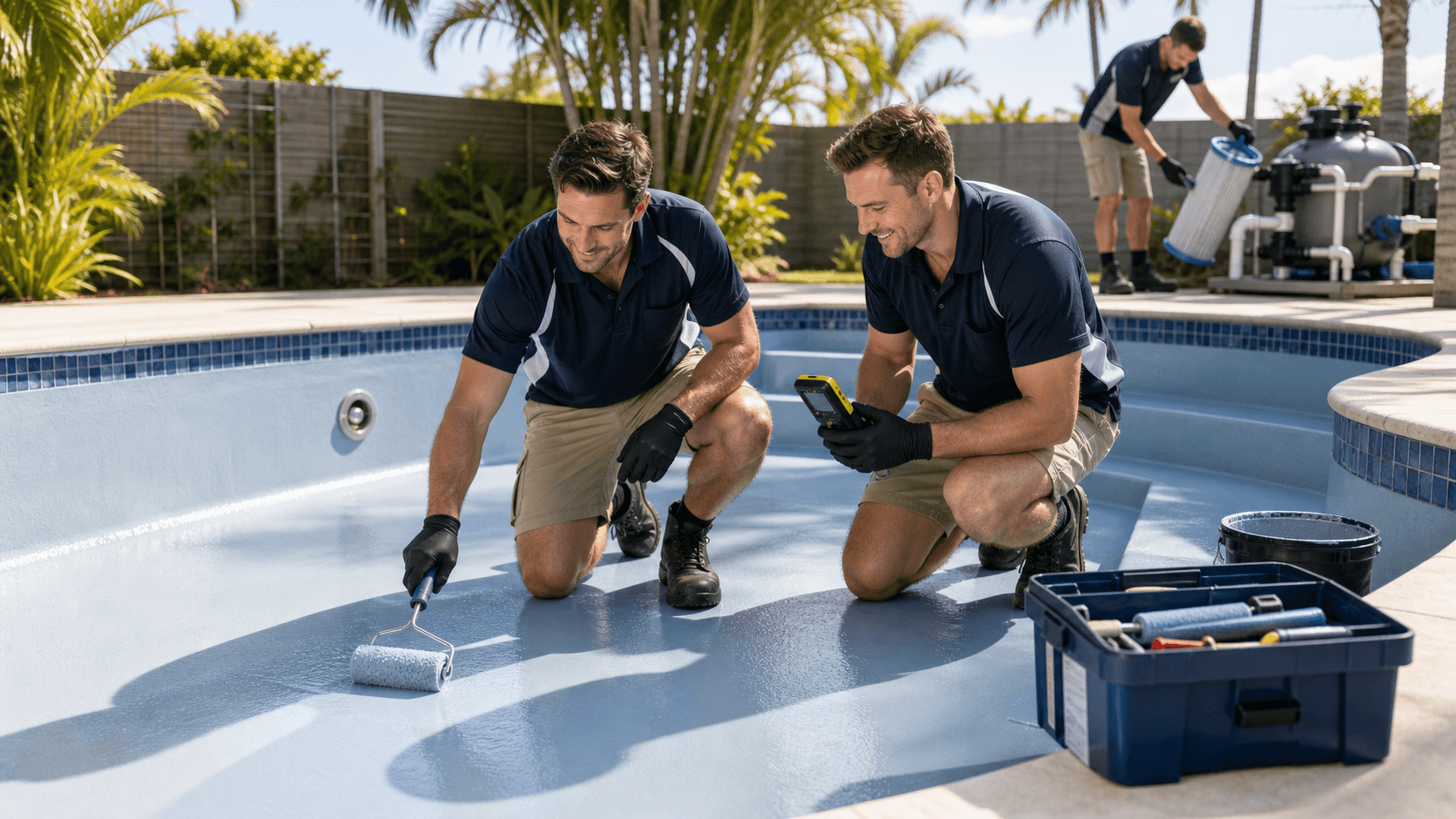
And it's not just the shell that's built to last. The finishes, like pebble interiors, epoxy sealers, or quality tiles, can stand up to both salty air and weeks of rain. When those are chosen thoughtfully, concrete pools can keep their shape, colour, and grip well beyond the storm season. This durability is part of what makes concrete a favourite for Mackay homeowners looking for steady, long-term value in their backyard pool.
Common Challenges During Mackay's Wet Months
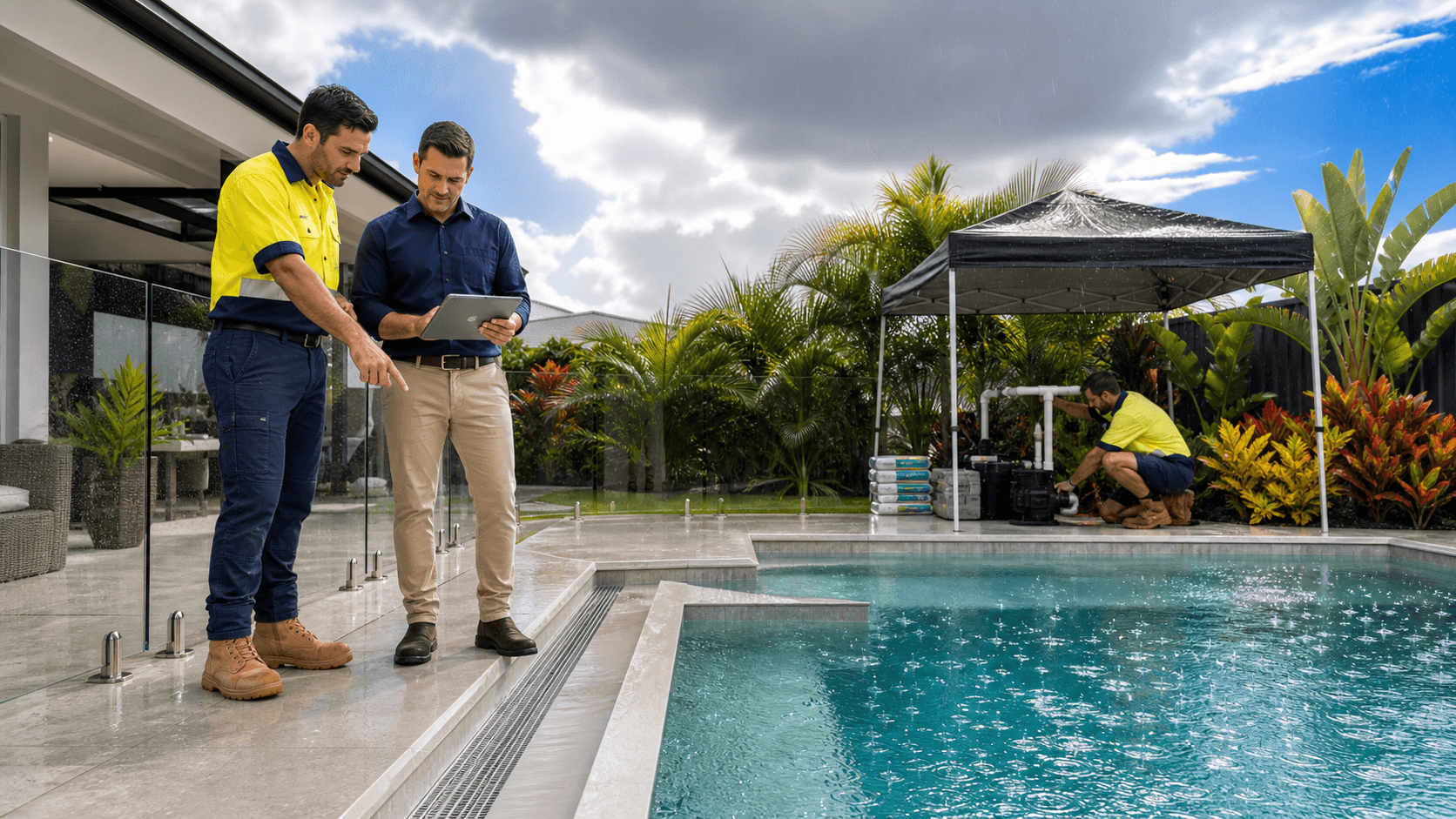
When the rains come in hard, backyard pools often take a hit. Drainage gets overwhelmed, debris builds up, and water quality becomes hard to balance. These aren't unusual problems. They're just part of life near the coast.
Here's what we see more often during Mackay's storm season:
- Pool water rises fast and may spill over, especially if ground drains are blocked
- Wet leaves and dirt sneak in and sit too long, causing stains or discolouration
- Extra rain changes the pool's chemistry, which can make it unsafe or dirty
When that happens, it's not just about cleaning up. Algae starts to grow in corners, surface wear shows faster, and some materials can flake or weaken under soggy conditions. The key is noticing the early signs and reacting quickly.
Frequent rain also means you might find yourself checking and adjusting your pool much more often than during dry spells. Sometimes the rain can make it look like the pool water is sparkling clean, but without good water chemistry, it could turn cloudy or green quite quickly. Pool covers may not always help during wild Mackay storms, as winds can pull debris into the water before you manage to put the cover on or after it's blown aside.
Features That Help Pools Cope Better
The best way to help a pool handle wet weather is to build it with those months in mind. Smart design choices can make a real difference when the backyard becomes damp for weeks.
Some helpful features include:
- Overflow outlets that catch rising water before it spills onto paving or lawns
- Finished surfaces that don't soak up moisture or crumble under salt-heavy air
- Protective covers that keep out leaves, rainwater, and light debris in between swims
Small design tweaks matter too. If lighting sits lower than usual or steps don't drain well, water builds up. That kind of standing water can lead to slipping, staining, or early material breakdown. Planning for runoff, slope, and exposure reduces those risks early, before they become expensive fixes.
It is also helpful to think about where the pool sits in your yard. Pools placed in shaded areas may dry out more slowly after rain, which might cause more slippery surfaces or slow the clearing of puddled water. Brighter, sun-exposed pools can warm up faster and return to balance more quickly after storms. But every position has different challenges, so these small planning details are worth talking through before the build starts.
Maintenance Routines That Really Work
Good habits go a long way during Mackay's wetter months. The weather isn't always predictable, so even when the forecast changes fast, routine care makes a big difference.
During the wet season, we focus on:
- Looking over the pool after rain to check water levels and remove debris early
- Clearing around drains and skimmers to avoid backups or overflow
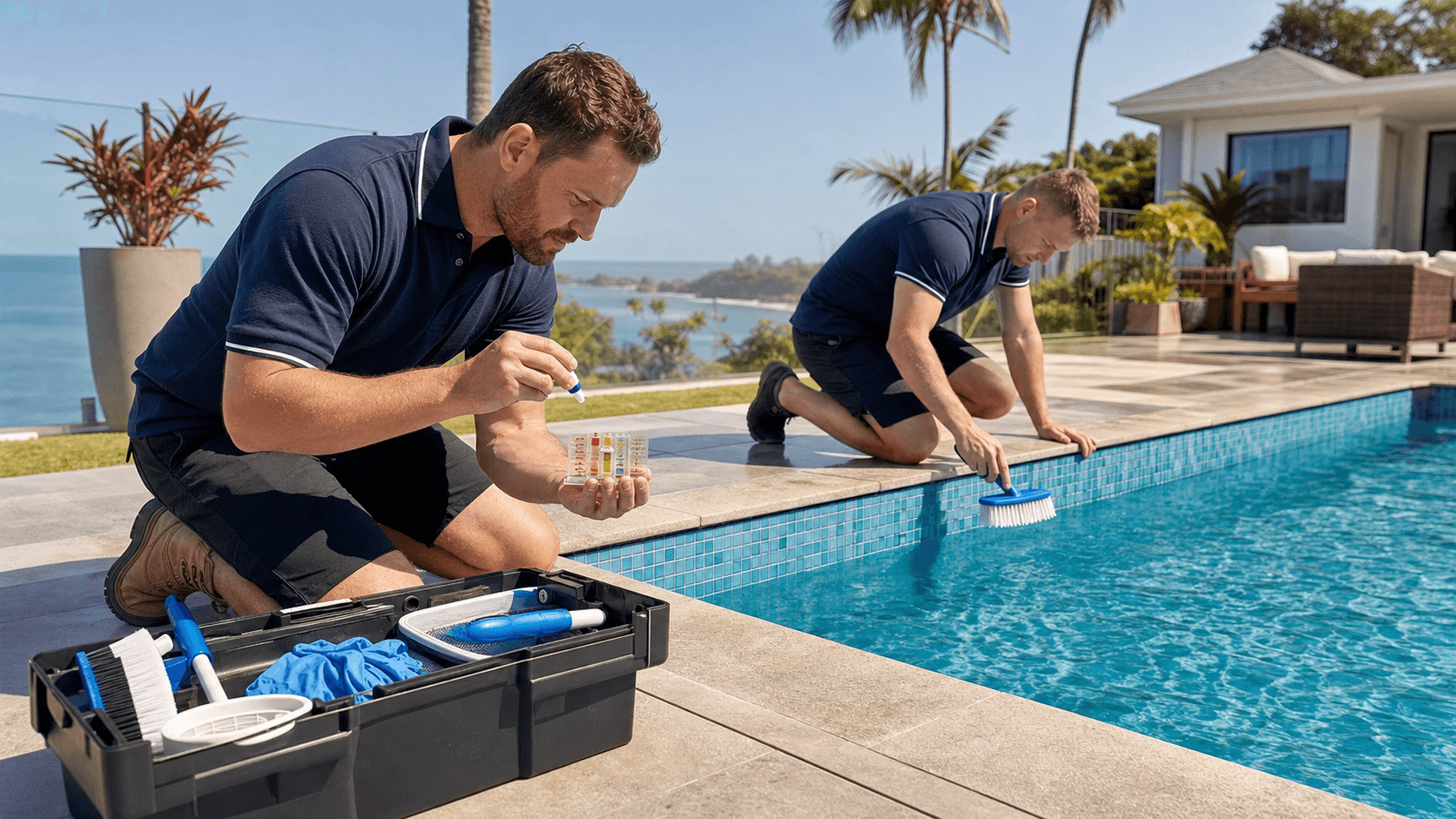
- Testing water often and adjusting chlorine and pH to keep everything balanced
The best tip? Don't wait until something looks off. If the rain's been steady, grab the test kit sooner. If a filter sounds different or smells wrong, don't ignore it. When storms keep swinging through, those small checks keep everything ticking over until the sunshine's back for good.
And while day-to-day care helps, there are times when weather patterns are just too intense. If the rainfall has been heavy and the pool water is cloudy or looks different, it is wise to have a professional take a look before things worsen. In those cases, we've found that calling in someone who knows the area can keep small problems from becoming much larger ones.
Pools in Mackay may also need a bit more brushing and scooping during wet months since organic matter can break down and stick to the surface faster in warm and humid conditions. Regular checks, even if the weather has only been unsettled for a few days, can keep things under control.
Why Wet Season Planning Starts Well Before the Rain
Waiting until the clouds roll in makes everything harder. Once the ground is soaked and storms are weekly visitors, it's a tough time to rethink a pool's drainage or update old finishes.
Planning ahead, ideally in late autumn, sets the pool up before conditions turn. The ground's still dry, the skies are calmer, and builders can work with fewer delays. This is the time to check if current drains are working, if covers fit correctly, or if sealing needs a refresh.
We always recommend thinking about:
- Where rain tends to collect or run after a heavy storm
- What materials have already aged and might wear out during a long wet spell
- Whether the pool design still fits how your property behaves through summer
It's tougher to make changes once the clouds stay around, so by doing a bit come May or June, the backyard's in better shape when the real wet season hits later.
Another reason for early planning is so you can spot any cracks or worn areas before the rain stress test hits. Even small chips in concrete or old grout can quickly turn into bigger problems if water seeps in continuously. By looking ahead and handling these details when the weather is dry and calm, you help your pool last much longer and stay safer through months of tropical rain.
Keep Your Pool Ready No Matter the Weather
Custom concrete pools in Mackay are up for the weather, if they're built and cared for the right way. The trick is knowing that tropical storms need tropical-ready planning. When we think ahead with sturdy finishes, sound drainage, and smart layouts, all that wild weather becomes easier to manage.
Good prep makes it less stressful when the rain just keeps coming. Instead of scrambling to make last-minute fixes or clean muddy water every weekend, we can all spend more time actually enjoying the pool, even during the wettest weeks of the year.
Thinking ahead to the next wet season in Mackay means planning now. We can manage drainage and choose finishes that stand up to tropical weather while helping you make timely updates for a pool that stays ready for both sunshine and storms. To see how we work with custom concrete pools in Mackay, reach out to Watersun Pools.
Frequently Asked Questions
Can a custom concrete pool handle Mackay’s wet season rain and storms?
Yes, a well built custom concrete pool can handle weeks of heavy rain and fast moving storms. Concrete is heavy and stable, so it is less likely to shift when the soil becomes saturated, especially when the design accounts for drainage and runoff.
Why is concrete a good choice for pools in Mackay’s tropical coastal climate?
Concrete stands up well to humid conditions and does not move as easily as lighter pool materials when the ground gets wet. With durable finishes like pebble interiors, epoxy sealers, or quality tiles, it can also resist salty air and frequent rain.
What problems do pools commonly face during Mackay’s wet season?
Heavy rain can quickly raise water levels, overflow onto surrounding areas, and wash leaves and dirt into the pool. The extra rainwater can also throw off pool chemistry, which can lead to cloudy water, algae growth, and staining if it is not corrected.
How do I stop my pool from overflowing during heavy rain?
Keep drains clear and make sure the pool has an overflow outlet that can release excess water before it spills onto paving or lawns. It also helps to plan yard drainage and slope so runoff is guided away from the pool area.
What is the difference between a custom pool design and a standard layout for wet season performance?
A custom design can be built to suit your block, including slopes and areas that hold water, so runoff is directed safely away. A standard layout may not match the natural drainage of the site, which can increase the risk of pooling water, overflow, and ongoing maintenance issues.